

Meet and greet signage is the sign your chauffeur holds to identify you at an airport pickup. The one rule that matters most: put your surname or the agreed group name on it, and confirm the exact terminal, level and zone in your booking. Where you meet often counts for more than how the sign looks, so treat the sign as one piece of a coordination plan.
TL;DR:
- Use the name exactly as it appears on the reservation, in large letters with strong contrast; add a group identifier only when needed.
- Airport rules differ: LAX sends rideshare and taxi passengers to a designated lot, while Boston uses a central lot; confirm your zone and walking route.
- Agree who contacts whom at the curb, share the flight number for tracking, and plan where to wait if you land early or arrive late.
- For groups, choose one contact person and one shared name; gather away from active loading lanes and confirm the passenger count before departure.
- Use flight tracking and a shared message thread as backups; location sharing or a driver and vehicle photo can help at remote pickup lots.
1. Quick checklist: what an effective chauffeur pickup sign includes
A good sign does one job: it lets you spot your driver in seconds. Keep it plain and keep it consistent with your booking.
- Name only. Use the passenger’s surname or the agreed group name, nothing more.
- Large, high-contrast lettering. The name should read from the curb or a short distance away.
- Minimal secondary text. Add a contact method only when it was agreed in advance. The company badge or driver ID stays small.
- Matching instructions. Confirm the meeting point in the booking (terminal, level, zone) so the sign complements those instructions instead of replacing them.
- One version of the name. Use the spelling that appears on the reservation, so there is no doubt about who the sign is for.
Pro Tip: Ask your chauffeur service to send a photo or description of the sign and the driver’s attire before you land, so you know exactly what to look for.
Everything beyond this list is decoration. A sign cluttered with slogans, logos and instructions is harder to read, and passengers scanning a crowded arrivals area will skip it.
2. Where do you meet at airports, and why does it matter?
Pickup arrangements for chauffeurs vary by airport. Each airport sets its own rules, and the same sign can be useless if you are standing in the wrong place. Common pickup arrangements include:
- Arrivals curb: the public curb outside baggage claim, where pickups may be limited to brief loading.
- Commercial curb or ground-transportation zone: a designated area for limousines, shuttles and taxis, sometimes a short walk from baggage claim. Kansas City (MCI), for example, signposts its commercial curb and directs chauffeurs to follow ground transportation signs down to the Arrivals Commercial Curb.
- Centralized limo and ride lot: Boston centralizes limousine and rideshare pickup in a central parking lot, and the meeting point may require a walk from the terminal.
- Cell-phone lot: a waiting area where drivers stay until the passenger is curbside.
Examples show how much this varies. At LAX, rideshare and taxis cannot pick up at the curb, and passengers are directed to the LAX-it lot with a free shuttle from baggage claim. Newark lists ground transport on Level 1 and arrivals on Level 2, per the New York/Newark tip sheet. Philadelphia separates hotel shuttles, taxis, limousines, ride apps and charter buses into numbered zones, with staff in the baggage claim and ground transportation areas to help.
Always include the terminal and the level or zone in every booking confirmation and in any meeting instructions you share.
3. How do you avoid curbside confusion with timing and coordination?
Curbside waiting rules vary by airport. At St. Pete–Clearwater International (PIE), drivers are asked to wait in the cell-phone lot until the party is curbside, and active loading is required once they pull up. So a driver who is not at the curb is usually following the rules, not missing you. PIE’s official FAQ also notes that non-ticketed people generally cannot go to secured gates, so the meeting happens after you exit.
A simple sequence can help everyone stay in sync:
- Track the flight. The chauffeur monitors your arrival time so the pickup follows your actual landing, not the scheduled one.
- Agree on a signal. Decide in advance that you will call or text when you are curbside, or that the driver will message you when they are approaching.
- Name who moves. Settle whether you walk to a zone or the driver comes to you once the flight lands on time.
- Plan for early and late arrivals. Add a short contingency: where you wait if you land early, and how the driver learns of a delay.
- Allow walking time. If your terminal uses a centralized lot or a shuttle, add extra minutes to the plan.
4. How do you make a sign readable at the airport?
Readability is mostly about contrast, size and durability. Airports themselves lean on simple, standardized signage; even a basic directional sign such as Crewmembers enter here is produced in standard sizes and formats because clarity and brevity drive design. Borrow that logic.
- Use a rigid or laminated board. Paper bends in a crowd. If weather is a concern, protect it with a sleeve.
- Choose high-contrast colors. Dark letters on white, or white letters on a dark background, read best.
- Skip decorative fonts. Plain block capitals are faster to read than script.
- Keep the layout minimal. Put the surname large on the top line. Add a short second line for a group name or company only if needed.
- Hold it at chest height. A sign held low or against the body is easy to miss.
Remember that visibility and location are separate problems. A highly readable sign does nothing if you are at the wrong terminal level.
5. What wording can you copy for your sign?
Here are ready-to-use layouts. Swap in the real name from your reservation.
- Single passenger: top line “ANDERSON”. Optional bottom line with a flight number or a short company label, only if preagreed.
- Group pickup: the meeting name plus a short identifier, such as “SMITH GROUP / MEETING A”.
- Corporate pickup: the company or meeting name plus the passenger surname. Leave long instructions off the sign.
- Family arrival: the shared surname alone is usually enough. Avoid nicknames the driver has never seen on the booking.
Pro Tip: Send the exact sign wording to your chauffeur in writing. If the sign and the reservation disagree, the driver may hesitate and so will you.
6. What should you confirm before the pickup?
A short prebooking checklist can help reduce the chance of a missed connection. Include these in the written confirmation:
- Terminal, arrivals level and exact curb or zone. Get it in writing, not only by phone.
- Who calls or texts at the curb. Name one contact number and a backup method.
- Airport constraints. Note any no-curb-waiting rule or required cell-phone lot.
- Extra minutes for walking or shuttles. Centralized lots and economy parking, such as PIE’s Key Lime and Strawberry lots with a free shuttle, show how transit time can shift a pickup.
- Flight details. Share the airline and flight number so the driver can track the arrival.
For a local walkthrough of what to expect, see our guide to Tampa pickup locations.
7. How do you greet multiple passengers or groups at once?
Groups add complexity, and a few habits keep things orderly. Use one clear group name on the sign rather than a list of individual names. Agree on a single point of contact in the group, someone who holds the driver’s number and can gather the others.
When several groups arrive on the same flight, add a short identifier so your sign is not confused with another. A format like “SMITH GROUP / MEETING A” separates your party from a similar one. If different members arrive on different flights, decide ahead of time whether the driver waits for everyone or runs separate pickups.
Gather the group away from the active loading lane before boarding the vehicle. At airports that require active loading at the curb, a quick head count away from the lane can help avoid blocking traffic. Share the vehicle type and luggage expectations with the group in advance, so nobody is surprised by seating or space.
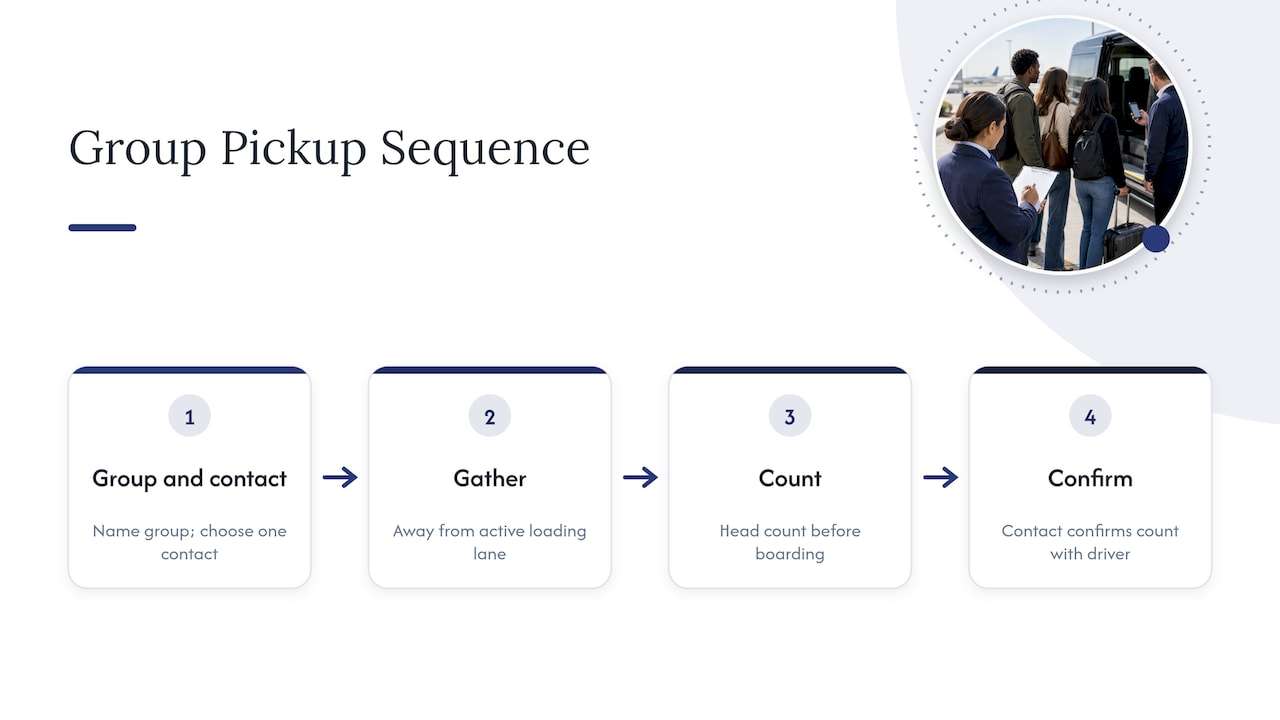
Finally, have the contact person confirm the count with the driver before leaving. A missing traveler is far easier to resolve at the pickup point than ten minutes down the road.
8. What etiquette applies when meeting international clients?
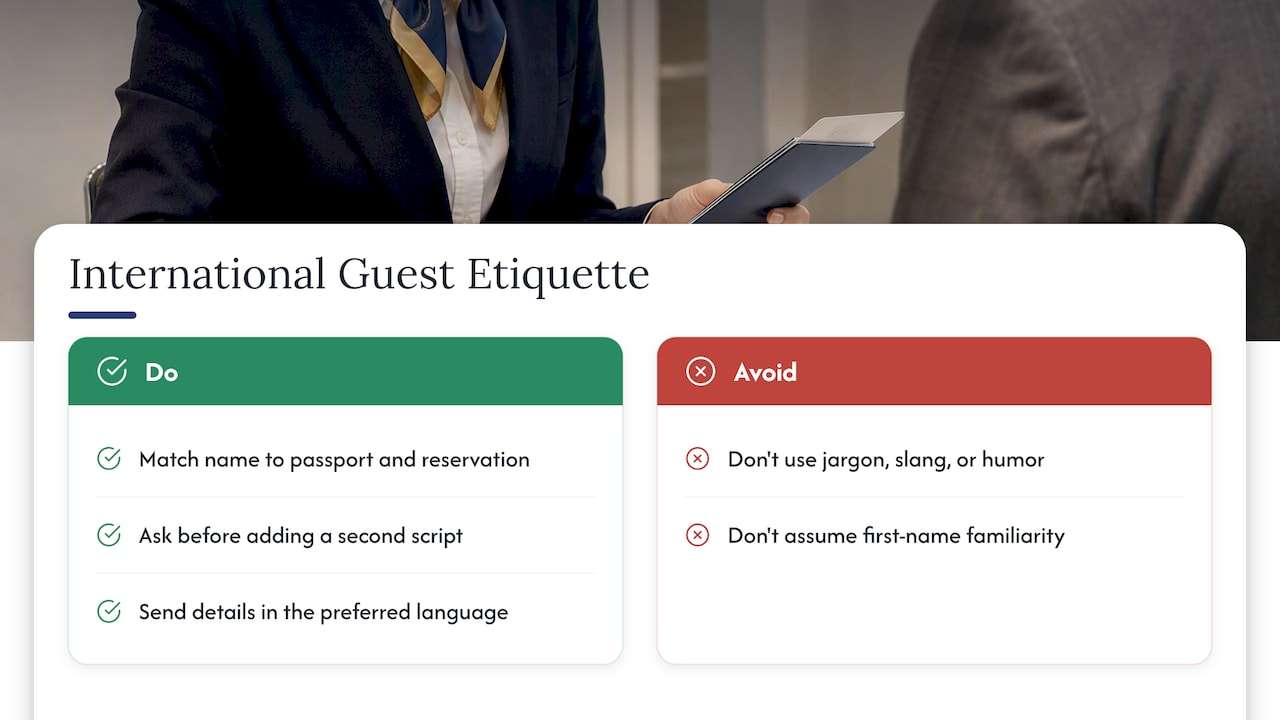
International guests are often tired, unfamiliar with the airport and unsure who is meeting them, so clarity and courtesy matter more than style. Spell the name exactly as it appears on the passport and reservation, including surname order. Naming conventions differ across cultures, and the family name may not come last. Confirm which name to display before the trip.
Keep the sign free of jargon, slang and humor. Plain text can be a clear choice, but if your client reads a different script, ask whether they would like it added as a small secondary line.
Greet with a calm, professional tone: a brief welcome, eye contact and an offer to help with luggage. Let the guest set the pace on handshakes and small talk. Avoid assuming a first name is acceptable, and use the title or surname until invited otherwise.
Send arrival details in advance in the client’s preferred language where possible, including the driver’s name, vehicle description and meeting point. A guest who knows exactly what to expect will find your sign faster and feel looked after from the first minute.
9. How can technology support your meet and greet sign?
Technology works best as a backup to the sign, not a replacement. The most useful tools are simple. Flight tracking lets the driver adjust to early or late landings without a phone call. A shared message thread gives you one place for the meeting point, the driver’s number and the vehicle description.
Real-time location sharing helps when a pickup involves a centralized lot or a shuttle ride. Both sides can see that the other is close, which cuts down on wandering. A photo of the driver and vehicle, sent before arrival, makes identification faster than any sign.
Digital signs and tablets can display a name, but they add risk: glare, low batteries and small screens are hard to read in sunlight or a crowd. A rigid printed board is a practical choice for many pickups. If you do use a screen, set it to maximum brightness and keep the text just as short as you would on paper.
Whatever tools you choose, remember that official airport maps and staff remain the authority on pickup zones. Check the arrival airport’s website for current rules before you travel.
10. How we think about signage and coordination
Professional chauffeurs treat the sign as the last step of a process, not the first. We confirm the meeting point, hold a concise name sign and follow the airport’s rules, which may include waiting in a cell-phone lot and moving only when passengers are ready to load. A booked meet-and-greet can reduce guesswork when driver and passenger share precise instructions ahead of time. The sign never replaces official pickup zones or terminal maps; it simply confirms you have found the right person at the right place.
— Embassy Limousine
11. Book a professional airport meet and greet with us
When the meeting point, the driver identification and the timing are coordinated for you, the pickup stops being a guessing game. Our team confirms where you will meet and which name appears on the sign before you land. Learn how it works on our airport meet-and-greet service page, then reserve through our Airport Services page and send us your flight details.
FAQ
What should a chauffeur’s airport pickup sign say?
It should show the passenger’s surname or the agreed group name and little else. Use large, high-contrast letters so the name reads from a short distance. Any company badge or driver ID should stay small and secondary.
Why isn’t my driver waiting at the curb?
Many airports restrict curbside waiting, so drivers stay in a cell-phone lot until you are ready. At PIE, drivers wait in the cell-phone lot until the party is curbside, then load and leave. Agree on a call or text signal so the driver arrives when you do.
Do I need a sign if I have the driver’s phone number?
A sign still helps, because it confirms identity in a busy arrivals area. The phone number and the sign work together with a confirmed meeting point. Treat the sign as one layer of the plan, not the whole plan.
What should I confirm before the pickup?
Confirm the terminal, level and exact zone in writing, plus who will call or text at the curb. Also ask about any airport rules that affect the meeting, such as a required cell-phone lot or a walk to a centralized pickup area. Share your flight number so the driver can track your arrival.
Sources
- Holiday Travel Tips – St. Pete-Clearwater International
- TSA SCPA Word Document Template
- TSA SCPA Word Document Template